Objective 1
1. Mass is the same no matter where you measure it but the weight depends on the force acting on it, say gravitational pull, so if you weigh yourself on the moon it would be different than on Earth unlike with mass.
2. The volume is 619.65 cm^3 (cm cubed)
3. The unit is grams over centimeters cubed g/cm^3
4. The formula for finding density is mass over volume m/v
5. The formula for finding volume is length times width times height
Objective 2
1. Physical changes are changes in the appereance, like water freezing, but chemical changes are actual changes in the molecules or substance inside of an object, wood burning.
2. Chemical changes occur in creating solids, gses, changes of color, and some types of light.
3. Substances in closed spaces remain constant. Antoine Lavoisier
4. Thermal energy is the number of total atoms in a substance or object but temperature is the average measure of the atoms in that substance.
5. Photosynthesis is a type of endothermic reaction and an explosion is an example of an exothermic reaction.
Objective 3
1. Kinetic, potential, thermal, electrical, electromagnetic, and chemical energy.
2. Kinetic energy
3. Potential energy
4. Electromagnetic energy take the form waves in matter existing electromagenteic energy can also be called electromagnetic radiation.
5. Electrical energy is the energy of electrons moving from one place to the other.
Objective 5
1. Boyles law is between pressure and volume and shows that they are a constant, pressure goes up, temperature goes up and vice versa.
2. The higher you go more air goes into the balloon so if they had filled the balloon al the way it would have burst.
3. Pressure times volume equals a constant.
4. This law applies to breathing and lungs, the more pressure on the lungs the higher volume of the lungs.
5. Boyles law is important in knowing about bouyancy and it is aslo very important to divers because it could potentially cause internal damage on air filled parts of the body.
Objective 6
1. Volume occupied by fixed amount of gas varies with temperature.
2. The molecules move more rapidly.
3. Jean Pilâtre de Rozier
4. His ballon worked perfectly and was able to lift off again in his helium filled balloon but it deflated.
5. pressure
Citations
http://www.oreivystescentras.lt/eng/hot_air_balloons/the_history_of_ballooning/
http://chemistry.about.com/cs/generalchemistry/a/aa051903a.htm
http://www.griffinscience.com/
http://books.google.com/books?id=SQXcpvjcJBUC&lpg=PA165&dq=jacques%20charles%20gas&pg=PA165#v=onepage&q&f=false
Thursday, November 11, 2010

Saturday, October 30, 2010
Work Cited
Notes for test
http://www.yourdictionary.com/images/main/A4cathry.jpg for picture
http://en.wikipedia.org/wiki/Electron for answer to electrons question
http://www.yourdictionary.com/images/main/A4cathry.jpg for picture
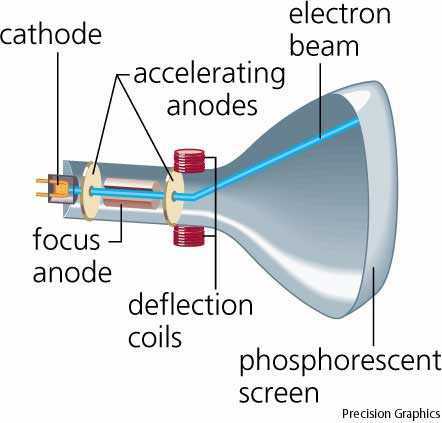
http://en.wikipedia.org/wiki/Electron for answer to electrons question
How do we know about electrons if they are so small?
Electrons are particles carrying a negative electric charge. They are too small for the naked eye to see, So how do we even know that they exist? Johann Hittorf discovered a glow that came from his cathode (electrode that electric current flows out). Then a physicist named Eugen Goldstein named these glowing objects cathode rays. Years later J.J. Thomas developed an experiment to show that these cathode rays were reall actually particles, not waves. These scientists all had something in common, they wanted to know what thes luminating, particles or waves were and J. J. Thomas was one of the first to determine that these were in fact particles and negatively charged electric paricles at that hence the name electron. We know about these electrons even though they are 1/1836 the size of a proton and protons aren't even visible to the naked eye by experiments as J.J. Thomas was the first to determine what electrons were he obviously had a pretty good way of figuring this out. His device was called the Cathode Ray Tubes. Using this device Thomas not only discovered electrons but that they were also divisible even though all scientists had believed that they were indivisible.


Here is a picture of Thomas' Cathode Ray Tube.
Connor Smith
Wednesday, October 27, 2010
Mom's answers to test 1
1. B. incorrect- correct answer is A.
2. C. correct
3. C. correct
4. A. correct
5. B. correct
6. Number of protons and neutrons minus 1. incorrect- correct answer is the atomic number or the number of protons.
2. C. correct
3. C. correct
4. A. correct
5. B. correct
6. Number of protons and neutrons minus 1. incorrect- correct answer is the atomic number or the number of protons.
test 1
1. Who created the Orbital model of the atom?
A. Rutherford
B. Bohr
C. Einstein
2. What is the most up to date model of the atom?
A. Bohr model
B. Pool ball model
C. cloud model
3. What model of the atom did Neils Bohr create?
A. Pool ball model
B. Cloud model
C. None of the above
4. How many elctrons are in Hydrogen? Atomic number is 1.
A. 1
B. 5
C. 3
5. Which of these scientists did not create a model of the atom?
A. Bohr
B. Ashley Earl
C. Rutherford
6. How do you find the number of electrons in an atom?
A. Rutherford
B. Bohr
C. Einstein
2. What is the most up to date model of the atom?
A. Bohr model
B. Pool ball model
C. cloud model
3. What model of the atom did Neils Bohr create?
A. Pool ball model
B. Cloud model
C. None of the above
4. How many elctrons are in Hydrogen? Atomic number is 1.
A. 1
B. 5
C. 3
5. Which of these scientists did not create a model of the atom?
A. Bohr
B. Ashley Earl
C. Rutherford
6. How do you find the number of electrons in an atom?
Friday, October 22, 2010
Connorisabeast Experiment
Gavin and I's experiment is on reaction inhibitors. The ingredients in the experiment include Potassium chlorate and sugar. The potassium chlorat and fire will dehydrate the sugar (take the carbon out of it) and will create a black "worm" that extends out of the ingredients. This worm is the sugar being dehydrated.
1. Observations
Potassium Chlorate
Sugar
All equal amounts (1st 10mm then 15 then 20)
2. Hypothesis

1. Observations
Potassium Chlorate
Sugar
All equal amounts (1st 10mm then 15 then 20)
2. Hypothesis
I think that the fire and potassium chlorate will dehydrate the sugar and cause it to burn, possibly creating a "worm" of the dehydrated sugar.

Monday, September 6, 2010
Hydrochloric acid
Hydrochloric acid is the most interesting compound in my opinion because it is extremely dangerous if in acid state. Although it's so powerful it's in your stomach, now thats scary! It was disovered in pure form in 1772 and was discovered to be made of hydrogen and chloride in 1818. During the industrial revolution Hydrogen chloride was used a lot in things like alkaline substances. In the twentieth century it has been strictly restricted for everyday people for its uses in cocaine, heroin, and meth. One of the most important uses of the compound is steel pickling which is removing rust, lime, etc. from steel. Hydrochloric is probably in your house somewhere because it is in lots of cleaning supplies and is very common in a low percentage of the acid. If it was the pure comound it would dissolve the botttle instantaneously. Hydrochloric acid is definitely the most interesting compound.
sources- wikipedia.org

sources- wikipedia.org

Subscribe to:
Posts (Atom)